Since its inception in 2014, Jupyter has been the standard environment for scientific research, data science, and ML engineering. The notebook is where hypotheses are tested, models are built, and raw data becomes insight. Most of our team has relied on and used Jupyter as part of their core workflow for years, and we anticipate that Jupyter will continue to drive the majority of data science workflows going forwards.
Sphinx AI is founded on the belief that interactive computing is the ideal convergence point for human creativity and AI-powered automation in data science. Our agents use Jupyter-based environments as workspaces for analysis, experimentation and problem-solving, enabling humans and machines to collaborate directly on enterprise-scale data.
We were proud to announce at JupyterCon that Sphinx AI had joined the Jupyter Foundation as a General Member and the Linux Foundation as a Silver Member. Open source is a foundation to build on and help improve, especially for companies like ours that take inspiration from and utilize Jupyter in our own products. We are excited to contribute to and help shape the future of Jupyter for years to come.
Below are a few highlights from the week at JupyterCon, where we had the chance to share Sphinx with the Jupyter community.
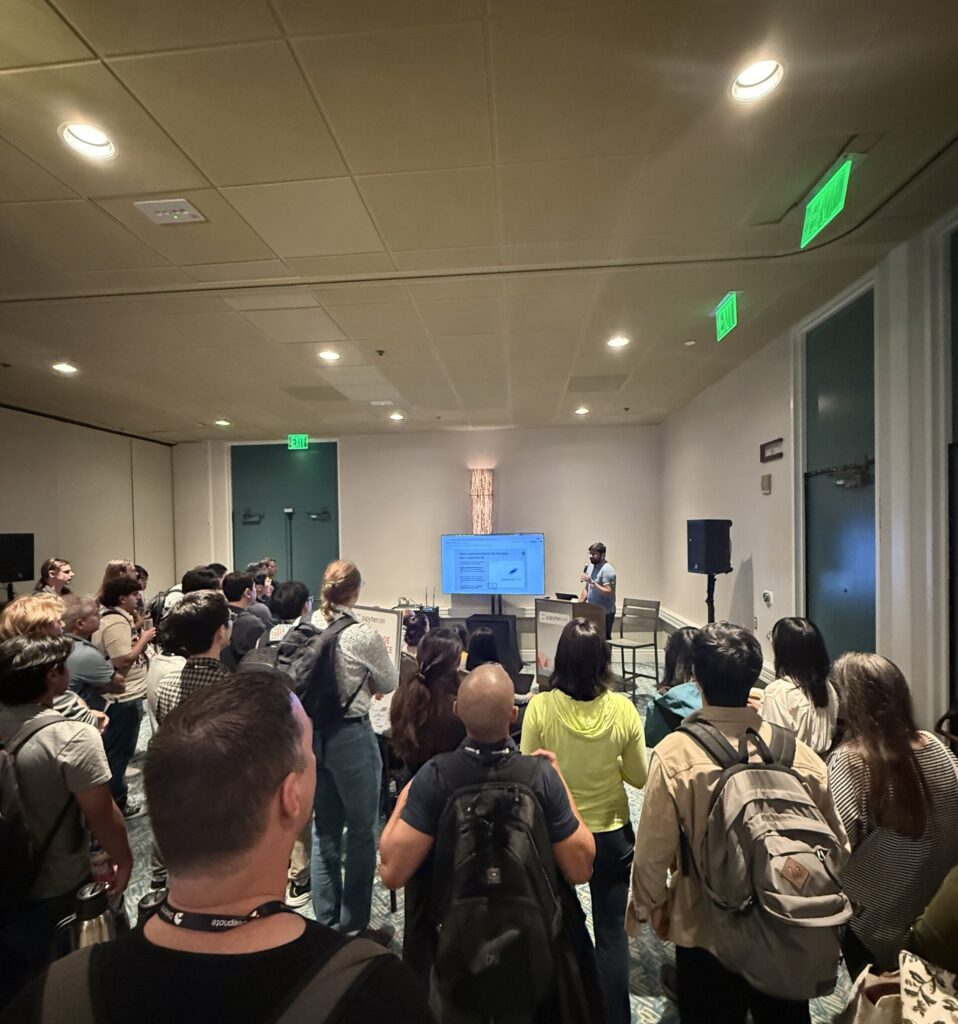
Rohan demoing Sphinx to a crowd of on-lookers.
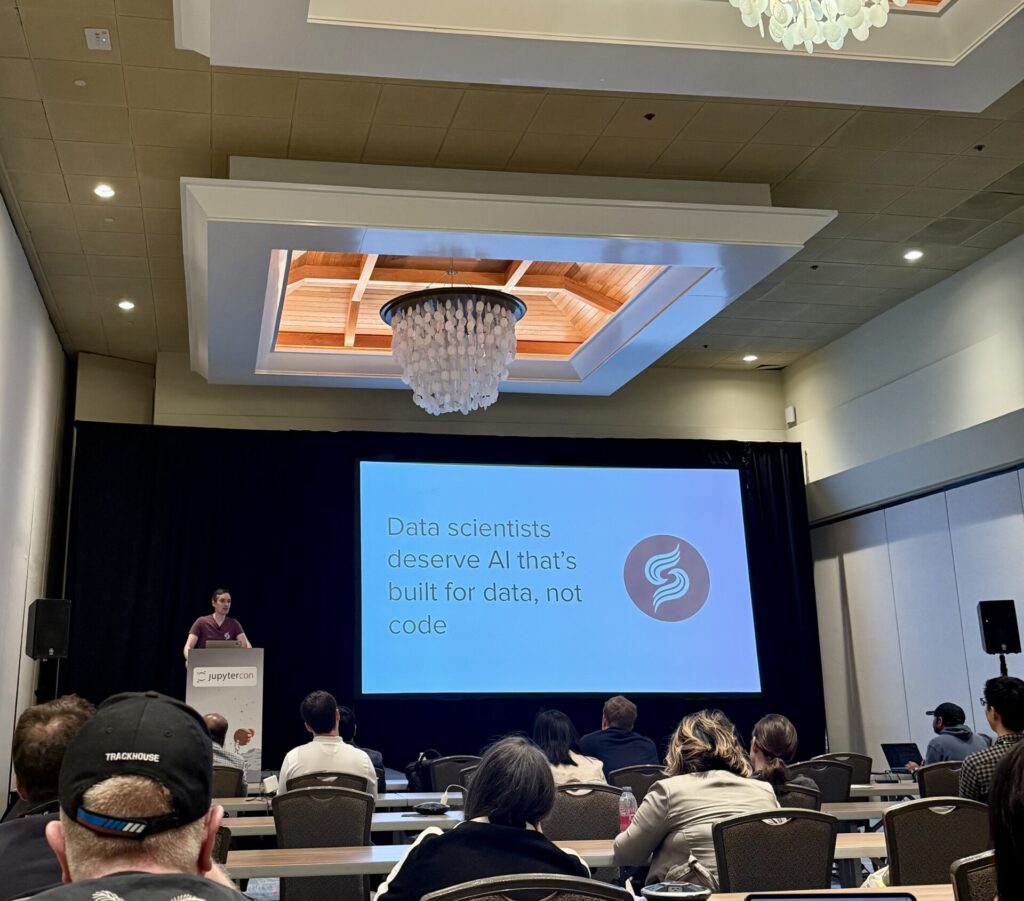
Jamie presenting a deep dive into Sphinx at the main hall.