Over the past few months, we’ve seen incredible traction across academia, with students and researchers using Sphinx to push the boundaries of what they can build. Supporting this next generation of data scientists has quickly become one of the most exciting parts of what we do.
At Georgia Tech’s Hacklytics last weekend, we posed a simple challenge: What’s the most creative way you can use Sphinx?
We made Sphinx free for all hackathon participants so students could fully explore their ideas—without getting slowed down by messy data or implementation hurdles.
The result: ambitious, creative projects brought to life. From real-time geopolitical news analysis to mood-based music curator, one thing was clear—students weren’t limited by implementation.
With Sphinx handling the heavy lifting—from data cleaning to modeling to visualization—teams were free to focus on experimentation and ideas. By removing technical barriers, we helped empower the next generation of data scientists to dream bigger, iterate faster, and build more complete projects than what you typically see in a hackathon.
Here are a few of our favorites.
🧩What they built
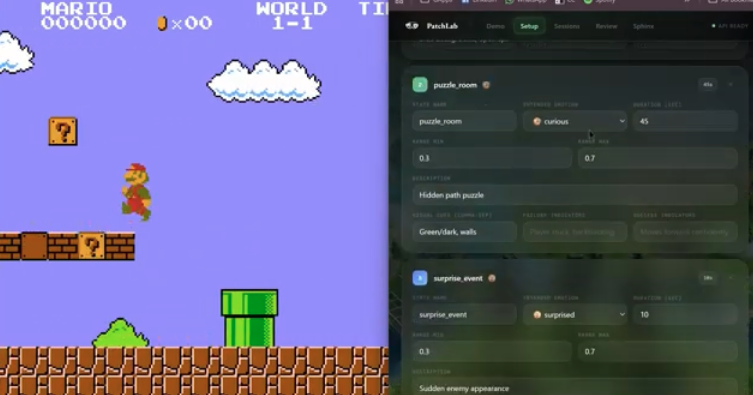
PatchLab is a playtesting platform that measures how players actually feel, not just what they do. By combining gameplay, webcam feeds, and Apple Watch biometrics into a per-second emotional timeline, it identifies frustration, confusion, delight, and boredom.
✨ Why it stood out
Developers can see where player emotions deviate from intended game experiences, automatically flagging pain points. In a demo on Super Mario Bros., PatchLab caught a 40-year-old design flaw in seconds. By combining emotion tracking with Sphinx’s AI analysis, the team created a tool that gives game developers answers, not just data.
⚙️ How Sphinx helped
PatchLab leveraged Sphinx to let developers instantly query complex gameplay and biometric data, uncover pain points, and generate visual insights.
“As players record themselves playing, we collect various forms of data, including heartbeat, eye tracking, and emotions. Sphinx was critical in making that data actually usable. It allows developers to query data directly in natural language, ask questions like “How did players feel about this obstacle?” and explore patterns across sessions. Sphinx turned complex multimodal data into something developers could reason about and build on.”
Nikhil S.
🧩 What they built
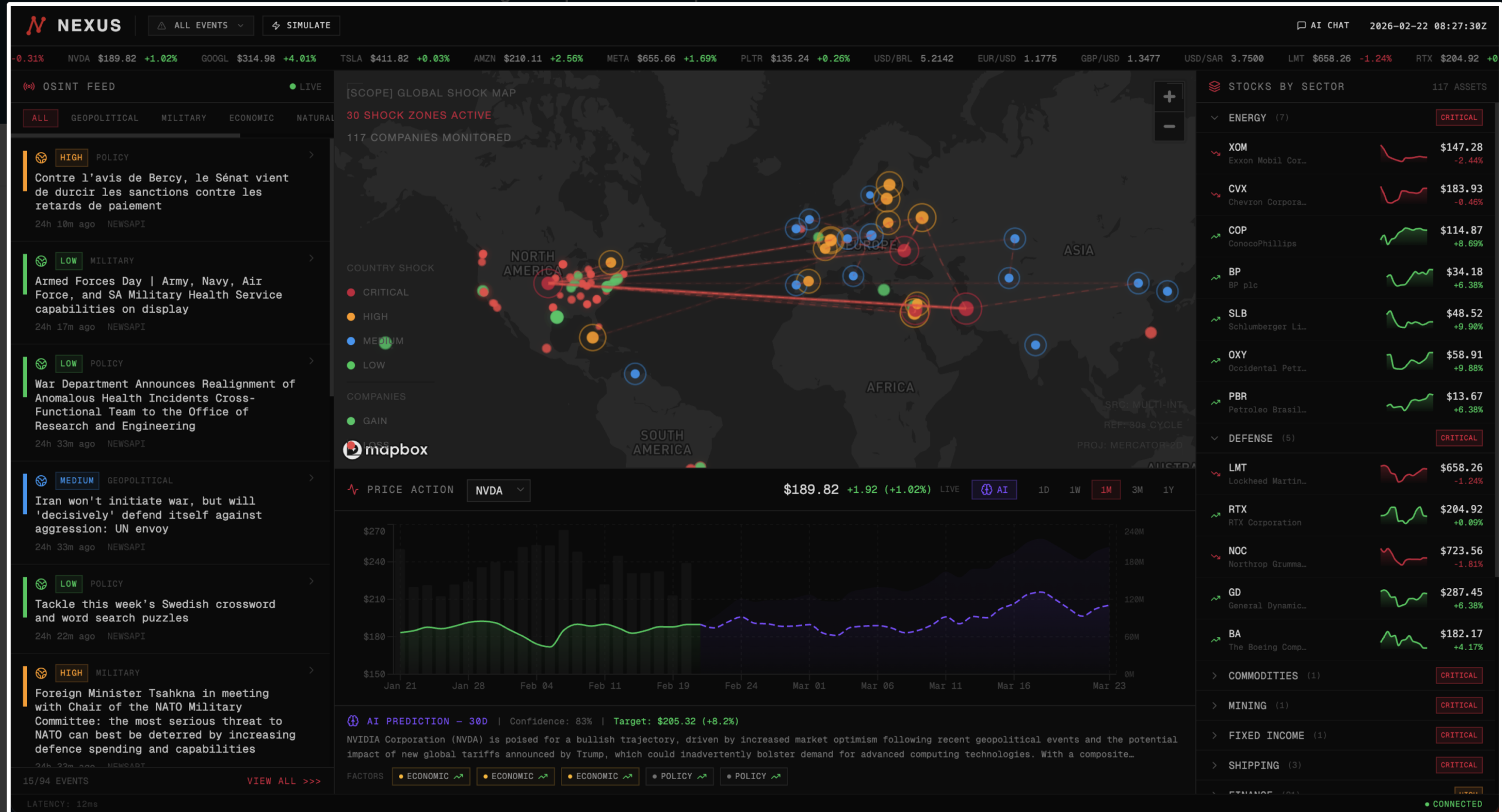
Nexus is a financial markets intelligence platform that maps how global events—like fires, strikes, or export restrictions—propagate as financial shockwaves across countries, sectors, and stocks. By visualizing these connections and simulating what-if scenarios, it makes complex market dynamics more accessible for investors.
⚙️ How Sphinx made it possible
Nexus built their entire orchestration layer on Sphinx, enabling users to uncover patterns, assess risks, and generate insights instantly from the massive event and market dataset.
🧩 What they built
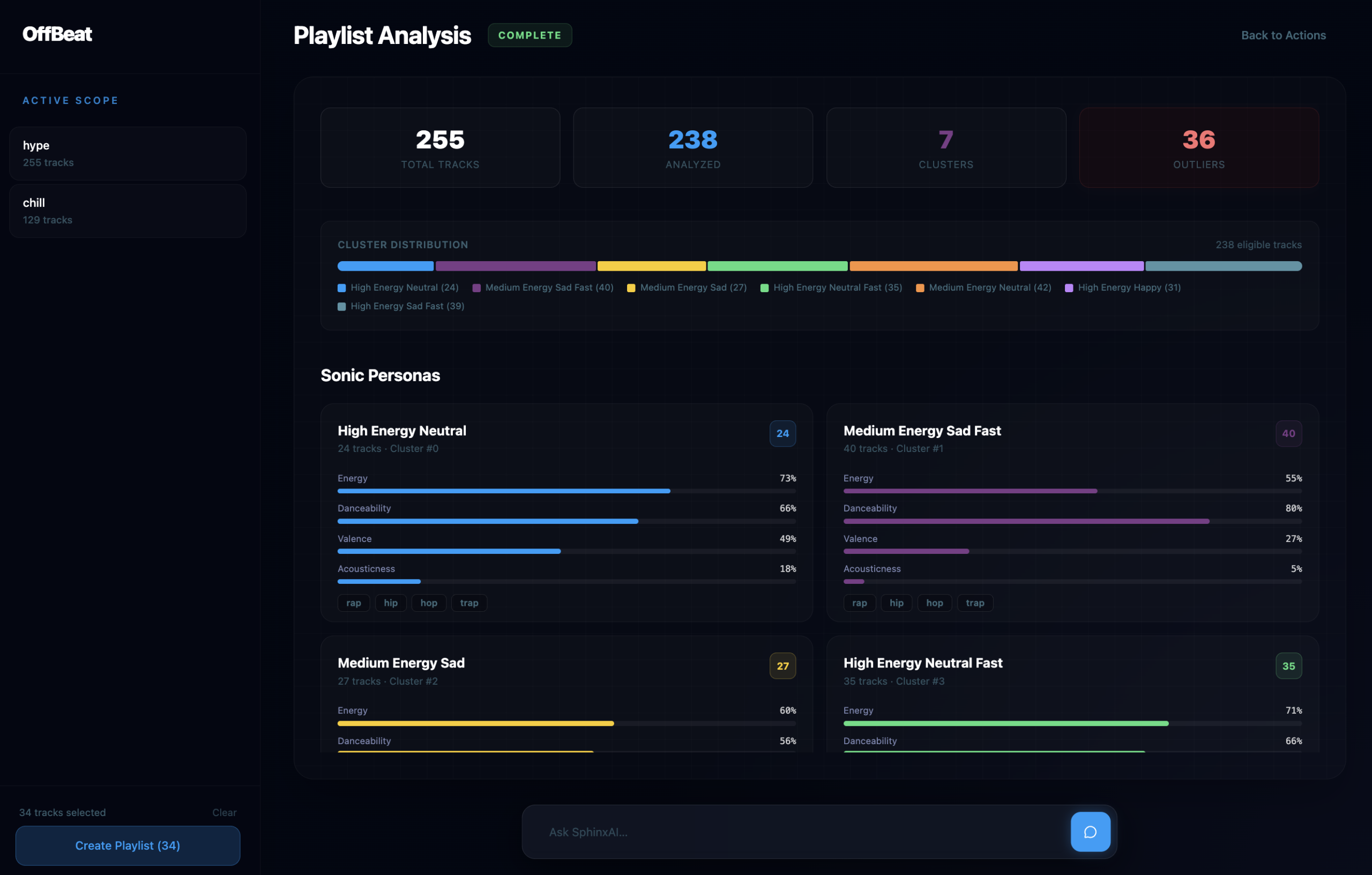
OffBeat analyzes a user’s Spotify playlists to understand their core “moods”, spot outlier tracks, and help re‑shape their listening experience. After logging in with Spotify and selecting playlists, a clustering‑based analysis is run on several track factors to group songs by mood and compute anomaly scores that highlight tracks whose vibe is very different from the rest.
⚙️ How Sphinx made it possible
Sphinx CLI powers an in‑app chatbot so users can ask natural‑language questions like “Why is this track an anomaly?” or “Show me a visualization of my chill songs” to get clear explanations and real-time visualizations.
“Sphinx was our AI copilot for both experimentation and production: we used the Jupyter integration to rapidly prototype and refine the playlist analysis logic, then used the CLI to turn that logic into a clean backend module and an in‑app chatbot that can answer questions and generate visualizations on top of the same code. The speed of the Sphinx copilot and its ability to recursively write code helped immensely in our development during the time pressure of a 36-hour hackathon.”
Saheth R.
🧩 What they built
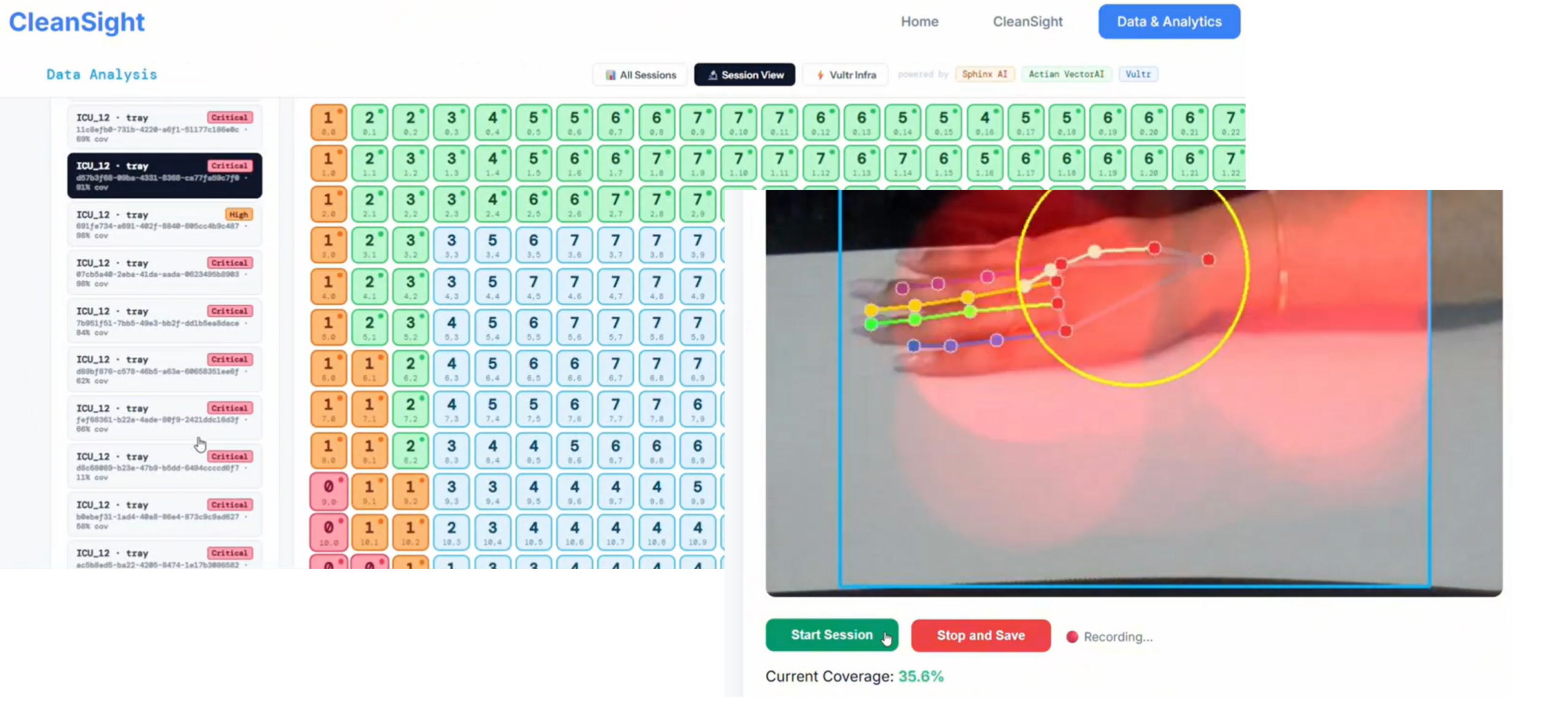
CleanSight is a data-driven sanitation platform that helps hospitals track and verify cleaning in real time. By logging activity, highlighting missed areas, and visualizing compliance, it reduces preventable infection risks and provides measurable oversight on sanitation practices.
⚙️ How Sphinx made it possible
Sphinx powers intelligent analytics and visualization over cleaning records, letting the user query patterns and monitor sanitation performance across rooms and facilities.
Inspired by these student projects? 👉 Try Sphinx today or reach out to hello@sphinx.ai if you’d like to collaborate—whether that’s bringing Sphinx to your campus, hosting a hackathon, or connecting with these students to learn more about their projects.