Sphinx 0.9 — A New Frontier for Data Science Agents
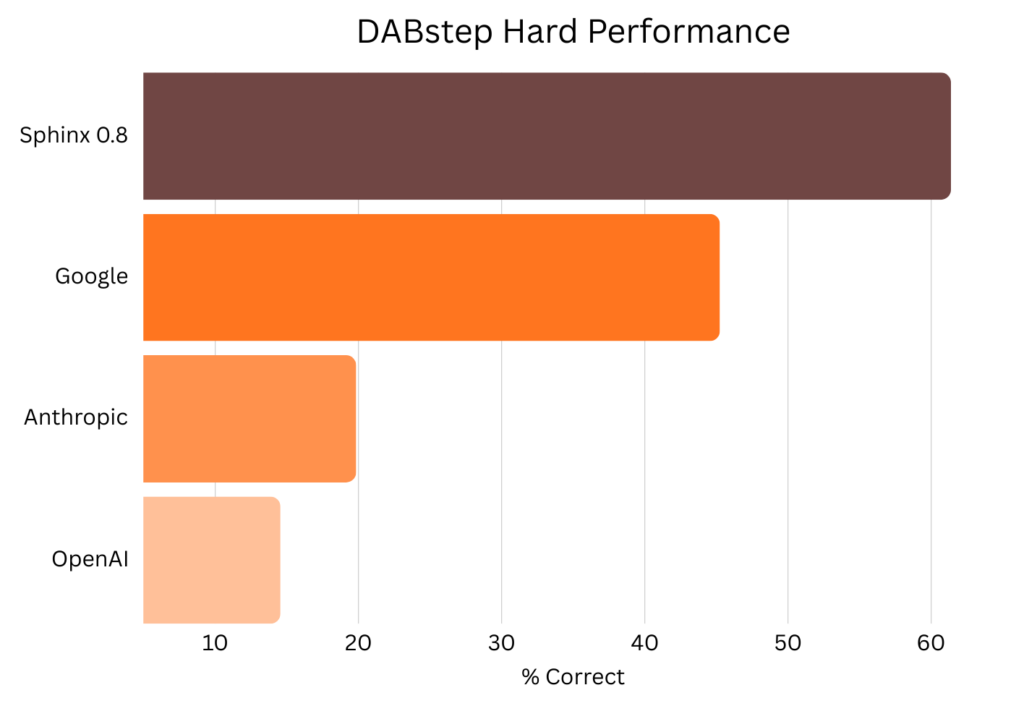
Sphinx 0.9 is available now! This update adds several significant features that you all have been asking for, such as a web search tool and global chat search, but the perhaps the largest changes are more subtle. We’ve overhauled our agentic evaluation and alignment procedures, and begun to see significant improvement in a variety of areas, ranging from expert application of complex data science techniques to human-level fluency in updating and improving Jupyter notebooks. We’ll have more to share on these efforts very soon, but for now we hope you enjoy the list of latest improvements:
- Web Search: Sphinx can now search the public internet when performing analyses. We’ve found that Sphinx is especially adept at using this tool to search for open datasets and APIs to pull in more data to answer questions, such as those pertaining to weather, sports, and finance. And our enterprise customers can rest assured that this feature is fully compliant with our zero data retention (ZDR) policy.
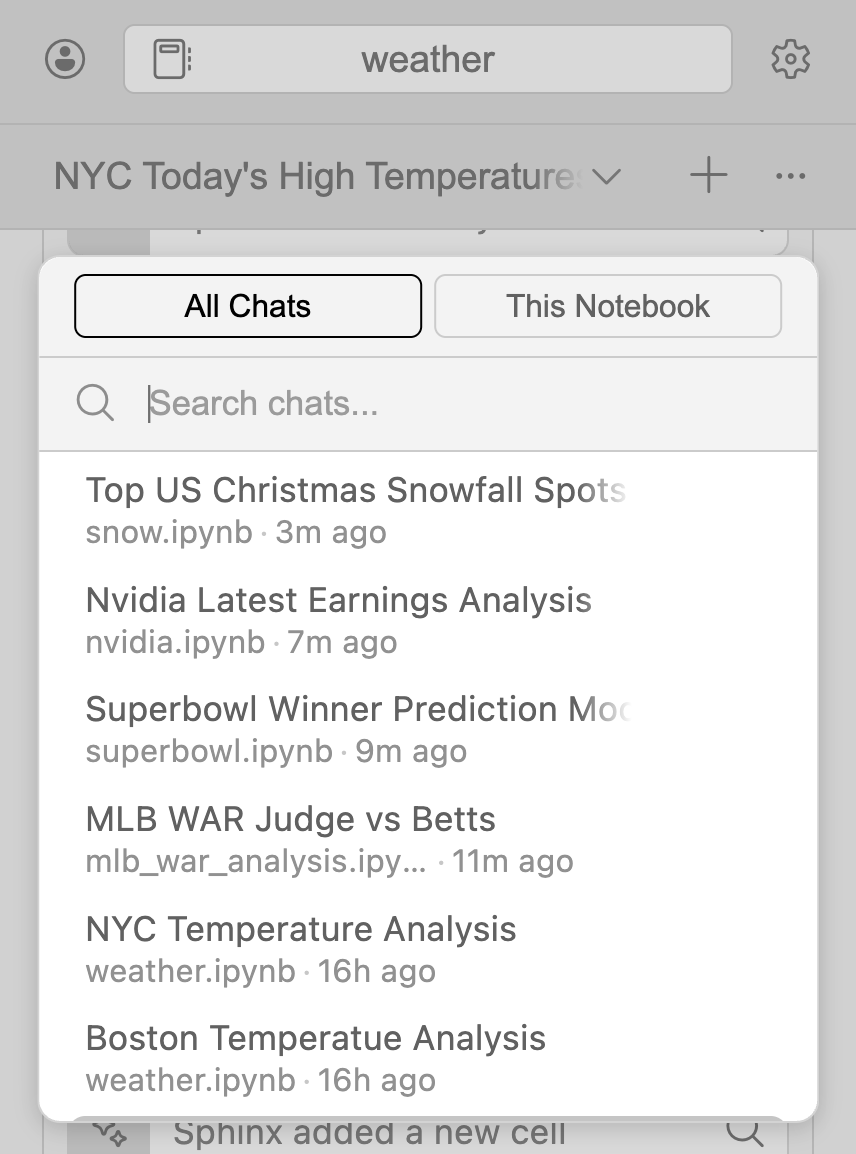
- Global Chat History: The VSCode extension now shows all past Sphinx chats from all notebooks, not just the active one, when searching past chats. This makes it much easier to quickly pull up your most recent analyses!
- Improved Agent Performance: Numerous improvements to Sphinx’s performance in a number of specific and general areas, including data science expertise and Jupyter notebook fluency. We’ll have more to share on this soon!
- Notebook-less Submission in CLI: Just want to ask Sphinx questions without having to create a notebook? The –notebook-filepath parameter of the CLI is now optional. When omitted, Sphinx will automatically create a suitably-named notebook to contain its analysis. We’ll be porting this feature to the VSCode client in an upcoming release!
- Message Queueing: Messages can now be typed while Sphinx is still running the previous analysis, letting you starting formulating a follow-up without having to wait for Sphinx to complete its current task.